Chatter Marks
Chatter Marks is a podcast of the Anchorage Museum, dedicated to exploring Alaska’s identity through the creative and critical thinking of ideas—past, present and future. Featuring interviews with artists, presenters, staff and others associated with the Anchorage Museum and its mission.
Listen on:



Episodes
Thursday Jul 01, 2021
Thursday Jul 01, 2021
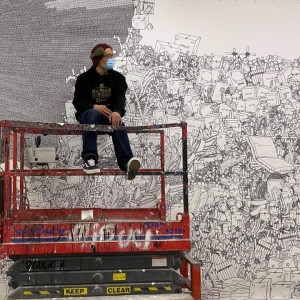
Illustrator Ted Kim is known for his unique art style, which includes complex and imaginative scenarios. These scenes have a tendency to depict hope and optimism. He says that this happened naturally—motivated, in part, after he got in the habit of watching documentaries that explored traumatic social issues and events of catastrophic, global failure. His art became his safety net, his method of inspiring self-preservation and hope.
Recently, Ted has become more introspective about his life and his art. He’s learned that life may not play out exactly how we want it to, but—and this is something that he’s been saying a lot lately—everything happens for a reason.
Monday Jun 14, 2021
Monday Jun 14, 2021
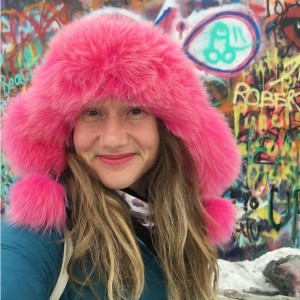
Charis Gullickson is the Curator and Public Sector PHD Student in Art History at the Arctic University of Norway. Charis has a mantra, and that is: museums are not neutral. They’re institutions of culture and agents of change. This is a relatively new concept because, historically, museums have been repositories of antiquities, often displaying artifacts with problematic pasts. This is an issue because without knowing its past, we may revere certain pieces of art and ignore their origins, which could result in perpetuating problematic ideas. So, a lot of Charis’ work is focused on contextualizing classic art so that it can be used as a tool for change.
Tuesday Jun 01, 2021
Tuesday Jun 01, 2021
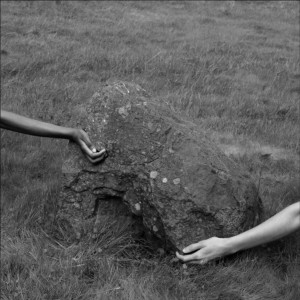
This is Part 4 of a 4-part series curated by the research collective, Erratics—a curatorial group that creates art that explores geologic phenomena and the effects of human impact on the environment. In this episode, Nina Elder, of Erratics, hosts a conversation about Ghosts, Reliquaries and Memory. It draws on humanity’s handling of climate change and how that reveals our often fraught relationship to the planet, and it explores how artists are moving through this time of ecological loss by seeking reliquaries and memories in the Earth itself.
Nina is joined by artists Tanja Geis, Dionne Lee and Renée Rhodes.
Thursday May 13, 2021
Thursday May 13, 2021
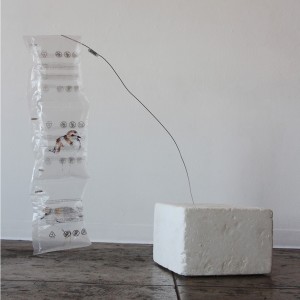
This is Part 3 of a 4-part series curated by the research collective Erratics, a curatorial group that creates art that explores geologic phenomena and the effects of human impact on the environment. In this episode, Hannah Perrine Mode, of Erratics, hosts a conversation about futurism and hope. It draws from personal relationships to deep time and geologic forces from past and present, and explores the methods with which artists are questioning, exploring and reimagining what our collective future or futures will look and feel like.
Hannah is joined by artists Sofía Córdova, Alicia Escott and nicholas b. jacobsen.
Wednesday May 05, 2021
Wednesday May 05, 2021
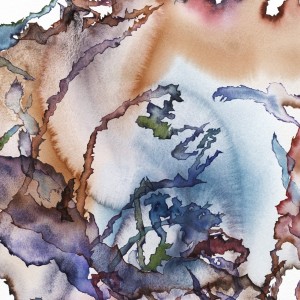
This is Part 2 of a 4-part series curated by the research collective, Erratics, a curatorial group that creates art that explores geologic phenomena and the effects of human impact on the environment. In this episode, Tyler Rai, of Erratics, hosts a conversation about Mutations, Kin and Hybrid Bodies. It explores the ever-changing conditions of climate change, how our interdependence across species presents hybridized forms of collaboration and how, as a result, we are challenged to expand the ways we understand change and resilience.
Tyler is joined by sculpture and mixed media artist Flavia D'Urso, artist and engineer Jiabao Li and artist and poet Daniela Molnar.
Saturday Apr 24, 2021
Saturday Apr 24, 2021
Erratics is a curatorial group that creates art that explores geologic phenomena and the effects of human impact on the environment. The group consists of three members: artist and researcher Nina Elder, movement artist and researcher Tyler Rai and interdisciplinary artist and educator Hannah Perrine Mode.
In Part 1 of this 4-part series, we meet Tyler, Nina and Hannah and they explain the origins of Erratics, their work within the collective and what unifies that work. The intention of the following conversation, as well as the three that follow, will be to reveal the concepts and ecologies that are foundational to a broad group of artists who are responding to geology, change and human action.
Friday Apr 02, 2021
Friday Apr 02, 2021
In this episode, Cody talks with four artists and musicians about their work on the Anchorage Museum’s new exhibition titled Listen Up: Northern Soundscapes. The exhibition explores and considers northern soundscapes to better understand humans’ relationship with, understanding of and impact on the natural world.
A soundscape is made up of all the sounds of a given environment. Artists and musicians were given a soundscape that they remixed using their distinctive styles. Their music styles range from acoustic and classical to hip-hop, ambient and electronica.
Wednesday Mar 17, 2021
Wednesday Mar 17, 2021
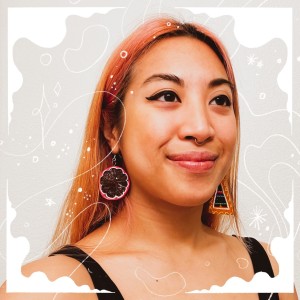
Rejoy Armamento says that she’s always been interested in art, ever since she was a kid, but that it took her a while to reconnect with it in a serious way as an adult. As she got older, her attraction and affinity for it was stifled by feelings of ambivalence about whether being an artist was a realistic occupation. That was until she went to college in San Francisco, which she describes as a formative experience that re-introduced her to art. She says that she loves the sense of movement that comes with the energy of an active city. And it’s that energy that is present in her murals and in her art.
Today, she’s able to look back on her childhood and realize that she’s always been the person that she knew she was—she’s always been an artist.