Chatter Marks
Chatter Marks is a podcast of the Anchorage Museum, dedicated to exploring Alaska’s identity through the creative and critical thinking of ideas—past, present and future. Featuring interviews with artists, presenters, staff and others associated with the Anchorage Museum and its mission.
Listen on:



Episodes
Sep 20, 2021
Sep 20, 2021
1 hr 35 min
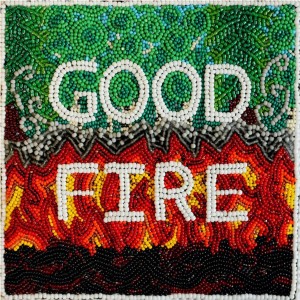
Dr. Amy Christianson is the host of Good Fire, a podcast that explores the social, cultural and ecological importance of fires. For thousands of years, Indigenous people have used fire to improve their environment and their community. More recently, however, because of colonialism and the centralization of power, many of those traditional practices have been made illegal, forcing them to stop or suffer legal repercussions. Today, governmental agencies want to integrate cultural burning into their systems, but Indigenous people are only asking for the autonomy to continue doing what they’ve done for thousands of years.
Matthew Kristoff also joins the conversation. He works on Good Fire with Dr. Christianson. He’s also the host of YourForest, a podcast that explores the natural world through conversations about environmental issues.
Aug 27, 2021
Aug 27, 2021
34 min
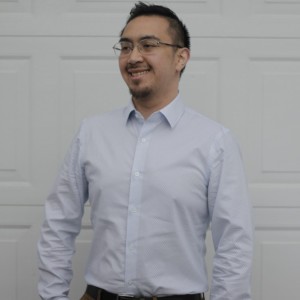
Kirk Gallardo is the Education Interpretation Manager at the Anchorage Museum. His job has many aspects, including outreach, research and curriculum creation. His education is in linguistics, and that also comes into play. He says that understanding language is an ongoing endeavor that involves considering how it influences identity and culture. Being able to speak and communicate with one another... and convey our thoughts and desires is so embedded within our understanding of the human experience that it can sometimes be forgotten how much it affects. It shapes our entire world view. It’s a cyclical concept Kirk describes as one that influences our culture by the word choices we have and then our culture influences the language that we use to describe it.
Aug 12, 2021
Aug 12, 2021
1 hr 4 min
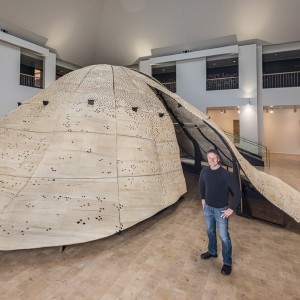
Artist and sculptor John Grade's work exists in the intersection of art, education and advocacy. Influenced by the environment and human impact on it, there’s a specific attention paid to the idea of impermanence. He often destroys his art as part of its showing or exhibition because art, like life, is temporary. Both are a journey that rarely turns out how you’d expect. So, it’s important to embrace change. To achieve this vision, John believes in the power of collaboration—that the inclusion of different perspectives always benefits and improves a project. That more people involved means more minds thinking through complex issues and ideas.
Aug 3, 2021
Aug 3, 2021
1 hr 8 min
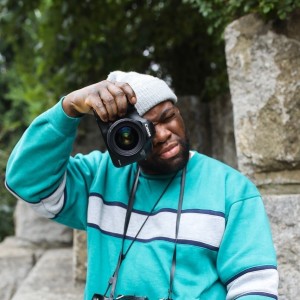
Photographer Jovell Rennie's ingenuity and talent continues to define both his personal and professional ambitions. His drive is influenced by his parents and his upbringing. When he was young, his mom passed away suddenly, leaving him and his dad to navigate life without their cornerstone. Jovell was a quiet, independent kid and his dad had a hands-off parenting approach—he was very present, but allowed his son to learn through experience. They both made it work and even thrived.
Jovell holds many of his formative experiences close. He considers them often and applies them to his life and work. When taking photos, for instance, he believes in staying out of the way and not being a burden. His mom remains a constant presence in his life, and his dad is his biggest supporter. He says that, above all, his motivation is making them proud by always conducting himself with integrity.
Jul 1, 2021
Jul 1, 2021
58 min
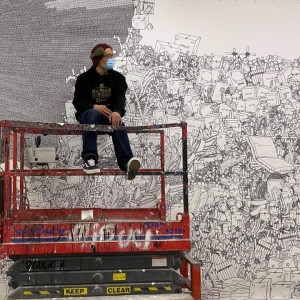
Illustrator Ted Kim is known for his unique art style, which includes complex and imaginative scenarios. These scenes have a tendency to depict hope and optimism. He says that this happened naturally—motivated, in part, after he got in the habit of watching documentaries that explored traumatic social issues and events of catastrophic, global failure. His art became his safety net, his method of inspiring self-preservation and hope.
Recently, Ted has become more introspective about his life and his art. He’s learned that life may not play out exactly how we want it to, but—and this is something that he’s been saying a lot lately—everything happens for a reason.
Jun 14, 2021
Jun 14, 2021
1 hr 10 min
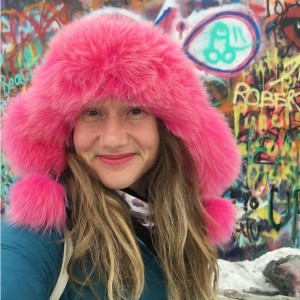
Charis Gullickson is the Curator and Public Sector PHD Student in Art History at the Arctic University of Norway. Charis has a mantra, and that is: museums are not neutral. They’re institutions of culture and agents of change. This is a relatively new concept because, historically, museums have been repositories of antiquities, often displaying artifacts with problematic pasts. This is an issue because without knowing its past, we may revere certain pieces of art and ignore their origins, which could result in perpetuating problematic ideas. So, a lot of Charis’ work is focused on contextualizing classic art so that it can be used as a tool for change.
Jun 1, 2021
Jun 1, 2021
58 min
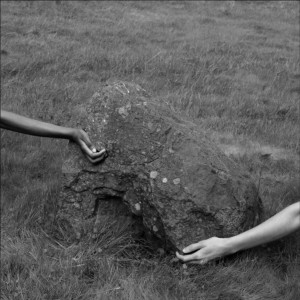
This is Part 4 of a 4-part series curated by the research collective, Erratics—a curatorial group that creates art that explores geologic phenomena and the effects of human impact on the environment. In this episode, Nina Elder, of Erratics, hosts a conversation about Ghosts, Reliquaries and Memory. It draws on humanity’s handling of climate change and how that reveals our often fraught relationship to the planet, and it explores how artists are moving through this time of ecological loss by seeking reliquaries and memories in the Earth itself.
Nina is joined by artists Tanja Geis, Dionne Lee and Renée Rhodes.
May 13, 2021
May 13, 2021
1 hr 8 min
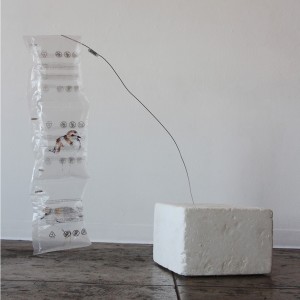
This is Part 3 of a 4-part series curated by the research collective Erratics, a curatorial group that creates art that explores geologic phenomena and the effects of human impact on the environment. In this episode, Hannah Perrine Mode, of Erratics, hosts a conversation about futurism and hope. It draws from personal relationships to deep time and geologic forces from past and present, and explores the methods with which artists are questioning, exploring and reimagining what our collective future or futures will look and feel like.
Hannah is joined by artists Sofía Córdova, Alicia Escott and nicholas b. jacobsen.