Chatter Marks
Chatter Marks is a podcast of the Anchorage Museum, dedicated to exploring Alaska’s identity through the creative and critical thinking of ideas—past, present and future. Featuring interviews with artists, presenters, staff and others associated with the Anchorage Museum and its mission.
Listen on:



Episodes
Friday Jan 28, 2022
Friday Jan 28, 2022
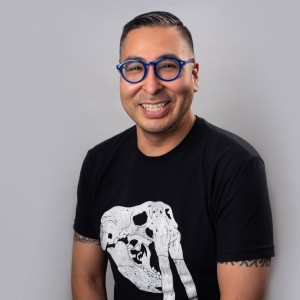
Ralph Sara is the host of the Anonymous Eskimo Recovery Podcast, a show that features conversations with guests who are working through alcohol and drug addiction, many of which are Indigenous People. Ralph’s heritage and his past informs many of these discussions. He grew up in Bethel, where he says that almost every household on his street was affected by alcoholism, including his own. That’s where his relationship with alcohol started, with his own family. He says it goes back to his first memory and his only memory of his father. The memory goes like this: He’s at his dad’s funeral and his sister is holding him. He’s looking down at his dad in his coffin and he asks his sister if he’s sleeping. She tells him, no, that dad went to heaven. It’s a vivid and heartbreaking image of how alcohol was introduced to Ralph because his dad drowned while he was drinking and the result affected his entire family.
Before he got sober, Ralph said that his life was a revolving door. He would go on binges and lose everything and then he would get sober. Sick of the revolving door, he went to residential treatment. In total, he went three times and during the last time he thought of doing a podcast. It would be something that would hold him accountable to his own sobriety. He would have conversations with other people about their stories of addiction and sobriety, conversations that could help other people going through the same thing understand that they’re not alone. And so The Anonymous Eskimo Recovery Podcast was born.
Monday Jan 24, 2022
Monday Jan 24, 2022
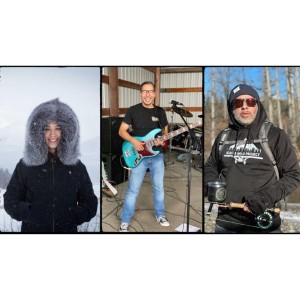
In this episode, Cody talks with three fellow Alaskan podcasters about what it's like creating podcasts about Alaskans. Alice Qannik Glenn hosts “Coffee & Quaq,” a show that celebrates and explores contemporary Native life in urban Alaska. In it, Alice sits down with Alaska Native thinkers, doers and changemakers to discuss issues that affect Alaska Native people, their culture and their environments. She also hosts and produces “Resolve,” a show about missing and murdered Indigenous women in Alaska, and also “Alaska Natives on the Frontline,” which highlights the adaptability and resilience of the Inupiat people in the face of climate change. Daniel Buitrago co-hosts the “Alaska Wild Project,” a show that gives an inside look at Alaska outdoor lifestyles. Ralph Sara is the host of the “Anonymous Eskimo Recovery Podcast,” a show that features conversations with guests who are working through alcohol and drug addiction, many of which are Indigenous People.
Thursday Dec 30, 2021
Thursday Dec 30, 2021
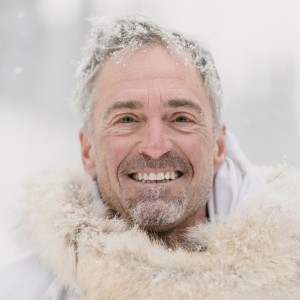
Author Seth Kantner was born and raised in Alaska, among the animals and the wilderness, and his writing reflects that. It draws from personal experience, often dealing with themes that involve animals, the environment and living off the land. He says that when he was a kid, his family was entirely attached to the seasons and food from the land. Both decided what they would do every day, be it hunting, fishing, picking berries or chopping wood. Seth continues to live this way of life. In the winter, he hunts for caribou and chops wood for the fire that heats his cabin and in the summer he works as a commercial fisherman. Writing, he says, is what he does after he’s done working for the day.
Seth says that he’s meticulous with his writing, that keeping the messiness and the irreverence and the beauty all mixed together is important to expressing an authentic image of remote Alaska. One that shows the reality of living in harsh, inhospitable environments, not just the beauty of things like the Northern Lights and flawless wilderness. Having grown up on the land, and remaining so close to it today, he’s watched how much everything has changed as a result of human encroachment and climate change. His writing details these observations and what it’s like to have, as he says, modernity bumping up against his life.
Photo by Kiliii Yuyan
Tuesday Dec 28, 2021
Tuesday Dec 28, 2021
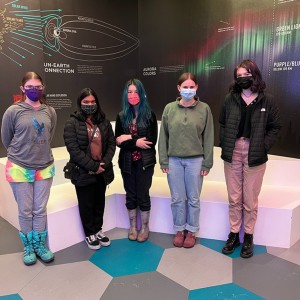
The Teen Climate Communicators program is hosted by the Anchorage Museum and offers activities and conversations around the past, present and future relationships between people and the land. Those involved, learn about how climate change is affecting Alaska’s diverse landscapes by hearing from Museum and community experts. Climate change is an ongoing conversation—one that is constantly evolving. So, to talk about it responsibly and thoughtfully, requires an ongoing education. That includes citing credible sources and learning about new ways to convey the effects of climate change.
In the following conversation, Cody is joined by four Teen Climate Communicators. Sofie Chisholm, Eleanor Poe, Emma Ellison and Emma Haas.
Monday Nov 29, 2021
Monday Nov 29, 2021
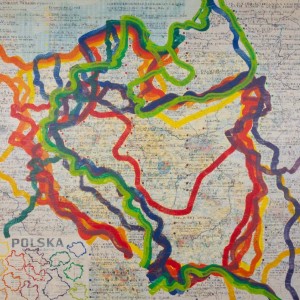
Joining this conversation are artists Stuart Hyatt, Dan Mills and Christina Seely. Stuart uses sound to understand our relationship with the natural world. Dan uses maps in paintings and collages as a way to explore ideas of historic and current events, including issues like colonialism. Christina uses photography to address the complexities of both built and natural global systems. All of their work—Stuart, Dan and Christina—is featured in the Anchorage Museum’s exhibition “Counter Cartographies: Living the Land,” which challenges our traditional understanding of what a map is.
Often, maps are viewed as objective and above reproach, but maps—just like any piece of art—come with the bias of their makers. They can be made with the intent of acquiring land and resources, as has historically been the case. So, it’s important to consider how they affect our perspective and understanding of land and our place in the world. It’s also important to consider ways we can re-imagine the traditional idea of mapping because an image can’t always document or express the reality of a place.
Artwork by Dan Mills
Friday Nov 26, 2021
Friday Nov 26, 2021
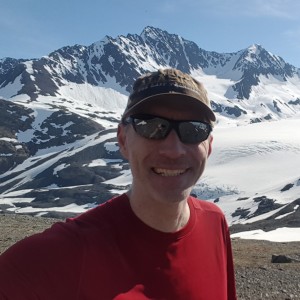
Brian Brettschneider is a climatologist and a research scientist. He collects data and analyzes it. And within that mountain of data, he believes many of the secrets of the world exist. But extracting meaning from all that information is a big challenge. It takes time, education and technology.
With its many research institutions located in arctic environments—including universities and weather stations—Alaska is important in the global conversation surrounding climate change. Brian says that, in a lot of ways, the state is a research laboratory with a collection of intellectual firepower located in close proximity to locations that are experiencing quick and dramatic changes. Changes that affect our ways of life, societal infrastructure, transportation and cultural identity.

Tuesday Nov 02, 2021
Tuesday Nov 02, 2021
Aaron Leggett explains the Alaska Native Claims Settlement Act, or ANCSA. ANCSA was established on December 18, 1971, and is a landmark policy for many reasons. As a result of the act, Alaska Natives retained 44 million acres of land and about 1 billion dollars to settle Indigenous land claims in Alaska. It also divided the state into 12 regional corporations and almost 200 village corporations that split the money and the land. Before ANCSA, the traditional way the United States had negotiated land settlements and compensation with Native tribes was in the form of reservations and treaties. ANCSA changed the fundamental existence of Alaska as a state as well as the way we think about Indigenous land settlements, and this December marks its 50th Anniversary.
Aaron is the president of the Native Village of Eklutna and the Anchorage Museum’s Senior Curator. He’s a shareholder in Cook Inlet Region, Incorporated, or CIRI, one of the regional Alaska Native corporations set up by ANCSA. He’s also a shareholder and has served on the board of Eklutna, Inc., one of the village corporations set up by ANCSA.
Photo courtesy of CIRI
Monday Oct 18, 2021
Monday Oct 18, 2021
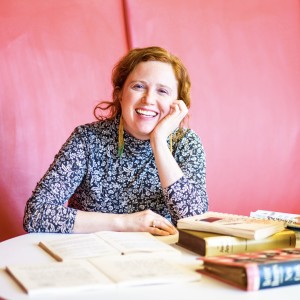
Journalism has been part of Julia O’Malley’s life since elementary school, where she remembers carrying around a notebook to keep track of what her classmates were doing. Then, in high school, she wrote for her school newspaper. But her love for cooking goes back even further. In fact, one of her first memories is of being 2 or 3 years old and mixing blueberries and milk in her toy kitchen.
The dinner table was a sacred place in Julia’s household. Sitting down and sharing a meal was important and everyone had a role, be it cooking the meal, setting the table or clearing the table. That affection for food also extended outside of home cooked meals. Growing up in Anchorage in the 1980s, there wasn’t a big variety of restaurants and what was cooked in homes. Ingredients were scarce then. So, when they were available, new meals were an experience that Julia cherished. When she thinks about food today, she says that it’s more than just sustenance, it expresses love, culture, care, identity and nostalgia.
Photo by Young Kim