Chatter Marks
Chatter Marks is a podcast of the Anchorage Museum, dedicated to exploring Alaska’s identity through the creative and critical thinking of ideas—past, present and future. Featuring interviews with artists, presenters, staff and others associated with the Anchorage Museum and its mission.
Listen on:



Episodes
Monday May 16, 2022
Monday May 16, 2022
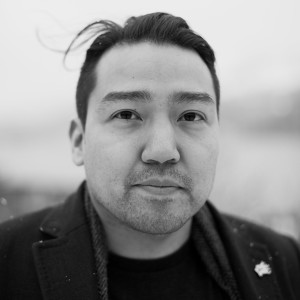
Rico Worl owns a business in Juneau that aims to distribute money spent on Alaska Native art back into Alaska Native communities. His business is called Trickster for the raven in Alaska Native culture that represents the Creator and is always playing tricks. Trickster began as a skateboard company, so there’s that association too. In fact, the idea for it started when Rico painted his clan crest onto his longboard and skated around Juneau.
Before the pandemic, Juneau saw about a million tourists a year. Many of which purchase what Rico calls knockoff Alaska Native art. A small percent of that money actually goes back to the communities that developed the art form. Rico recognized this and came up with a plan: He would design and sell art that blends modern and traditional styles and make sure the proceeds go back to the Alaska Native communities from which they came.
Friday Apr 22, 2022
Friday Apr 22, 2022
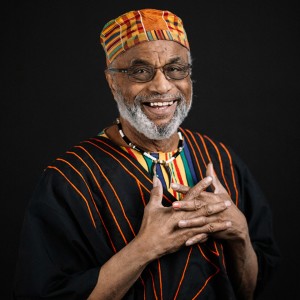
Cal Williams is an activist and community archivist. He sees his involvement in activism as more of a pull than a draw. He didn’t plan it, it just happened. Seven days after he was born, Pearl Harbor was bombed and most of the men in his life went to war. So, the influences he had at those early ages came from the women in his life. He saw how they did what they could to help the war effort.
He’s 80 now, and his list of achievements are extensive. They include the president of the NAACP of Alaska, the recipient of the St. Francis of Assisi Award and working with HistoryMakers, an organization that collects and preserves the well-known and unsung stories of African Americans. Considering his current work with HistoryMakers and the Anchorage Museum, Cal says that he chases the dead — he reads obituaries and attends funerals in order to collect the stories that would otherwise be lost forever.
Photo by Jovell Rennie
Monday Apr 11, 2022
Monday Apr 11, 2022
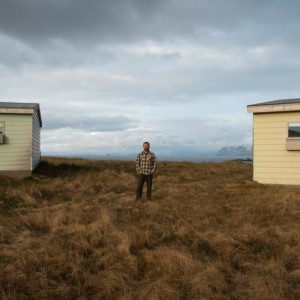
Ben Huff believes that photography is gloriously incomplete, that it has the potential to start a conversation, but it takes the viewer to finish it — to bring their own history and their own knowledge to the table and fill in the blanks. That’s one of the things that’s wonderful about photography, he says, it prompts a narrative. It introduces a concept or an idea for further examination.
Much of his work is interested in exploited landscapes, in the things that we’ve brought to places. His recent book, Atomic Island, details the U.S. military occupation of Adak Island during World War II and the aftermath of their departure that left so much abandoned infrastructure and debris.
Saturday Mar 19, 2022
Saturday Mar 19, 2022
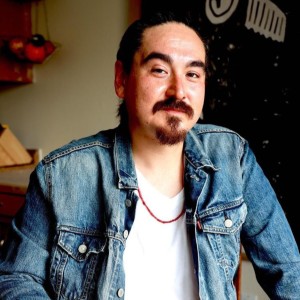
James Dommek, Jr. grew up in Kotzebue playing basketball. Most kids did — it was and still is a big part of the rural Alaska experience. In the summertime, they played all night because the sun was out. And in the wintertime — despite the cold and ball going flat — they would still play. In 1996, James moved to Anchorage, where he continued playing basketball for a while, but eventually moved on to playing music. He became as obsessive about music as he was basketball and, after high school, he joined a rock band called The Whipsaws. And that’s where he spent his 20s, playing drums all up and down the Alaska road system at almost every bar that had a stage. He says that he realized he was a storyteller from those days on the road. If something memorable happened, he would be asked to retell the story because people had a tendency to listen when he spoke.
In 2019, James and his producers released Midnight Son, a true crime podcast that explores the story of Teddy Kyle Smith, who went from being an actor to a fugitive in a quick succession of tragic events. What followed was a case that involved Alaska Native folklore and the United States justice system. In the podcast, James talks about how this story gave itself to him — how it showed its neck. So, for two years he and his producers worked on Midnight Son — collecting interviews, listening to courtroom audio, writing and just generally wrapping their minds around the case. James says that he was genuinely obsessed with Teddy’s story and that if he didn’t tell it, he would regret it for the rest of his life.
Monday Mar 14, 2022
Monday Mar 14, 2022
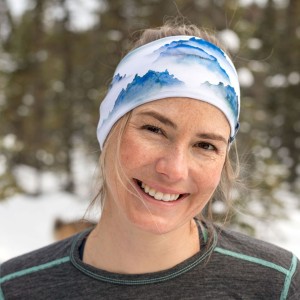
Jennifer Loofbourrow is the owner of Alpine Fit, an Alaska-based outdoor clothing company that specializes in offering a variety of fit options for different body types. Jennifer’s active, outdoor lifestyle influenced her decision to start the brand. From 2004 to 2009, she kayaked the outer islands of Alaska's southeast coastline. In that time, she gained an intimate understanding of what basic gear is needed on those trips and how it’s important to consider things like weather and the duration of the trip. She’s actually been told that she’s the bullseye of her target audience.
She says that she lives her life like it’s an endurance sport, so finding a balance between work and rest is important. That balance hasn’t always been easy to find, but she’s getting better at it.
Tuesday Mar 01, 2022
Tuesday Mar 01, 2022
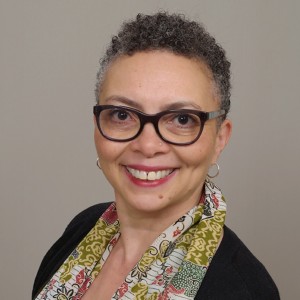
Julie Varee is the Community Outreach Archivist at the Anchorage Museum. So much of her life has been dedicated to helping others. She grew up in a household — back in Gary, Indiana — that put a lot of energy into philanthropy. In fact, her earliest memory is of tagging along with her mom and her grandmother to help the elderly people in her neighborhood. That sense of purpose and charity would define her professional life well into adulthood.
Julie got out of philanthropy and development at 60 years old and began pursuing another career with the Anchorage Museum. The first exhibition she worked on was "Black Lives in Alaska: Journey, Justice, Joy." It’s told through archival photos and collected materials, and showcases the richness and resilience of Black lives in Alaska. Julie says that exhibitions like this one can help people be more open to the stories of other people’s lives and experiences, that their way of experiencing the world is not the only way or the best way or even the right way.
Monday Feb 07, 2022
Monday Feb 07, 2022
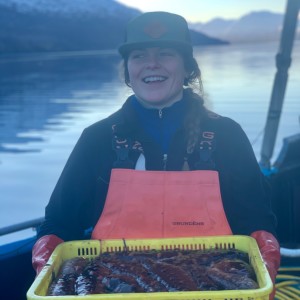
Chloe Ivanoff is new to the kelp farming industry in Kodiak. She says that because it’s such a new industry in the United States, there’s always something to learn or something to innovate. The process of kelp farming, for instance, is still being tweaked. Kelp spores are gathered locally and brought to a lab where they’re grown. When they’re ready for a larger grow environment, the kelp is set in the ocean along a group of grow lines. However, once they’re in the water, they’re at the mercy of the elements. Unlike agricultural farming, kelp is grown in its natural environment, without constant surveillance. After it’s harvested and processed, the kelp, or seaweed, is generally used in food products like seasonings, sauces or even made into noodles.
Above all, Chloe wants to be a lifelong learner. With kelp farming, that means being adaptable. So, if a storm hits or her grow lines become tangled, she needs to go to work, regardless of time or weather. She looks to other local farms for understanding and inspiration. For what works and what doesn’t.
Friday Jan 28, 2022
Friday Jan 28, 2022
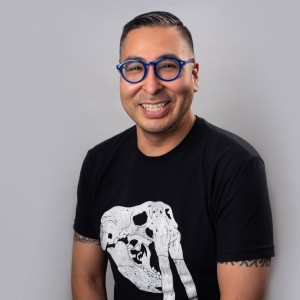
Ralph Sara is the host of the Anonymous Eskimo Recovery Podcast, a show that features conversations with guests who are working through alcohol and drug addiction, many of which are Indigenous People. Ralph’s heritage and his past informs many of these discussions. He grew up in Bethel, where he says that almost every household on his street was affected by alcoholism, including his own. That’s where his relationship with alcohol started, with his own family. He says it goes back to his first memory and his only memory of his father. The memory goes like this: He’s at his dad’s funeral and his sister is holding him. He’s looking down at his dad in his coffin and he asks his sister if he’s sleeping. She tells him, no, that dad went to heaven. It’s a vivid and heartbreaking image of how alcohol was introduced to Ralph because his dad drowned while he was drinking and the result affected his entire family.
Before he got sober, Ralph said that his life was a revolving door. He would go on binges and lose everything and then he would get sober. Sick of the revolving door, he went to residential treatment. In total, he went three times and during the last time he thought of doing a podcast. It would be something that would hold him accountable to his own sobriety. He would have conversations with other people about their stories of addiction and sobriety, conversations that could help other people going through the same thing understand that they’re not alone. And so The Anonymous Eskimo Recovery Podcast was born.